SEO and GEO
How to Get Recommended by Perplexity: A Practical GEO Strategy
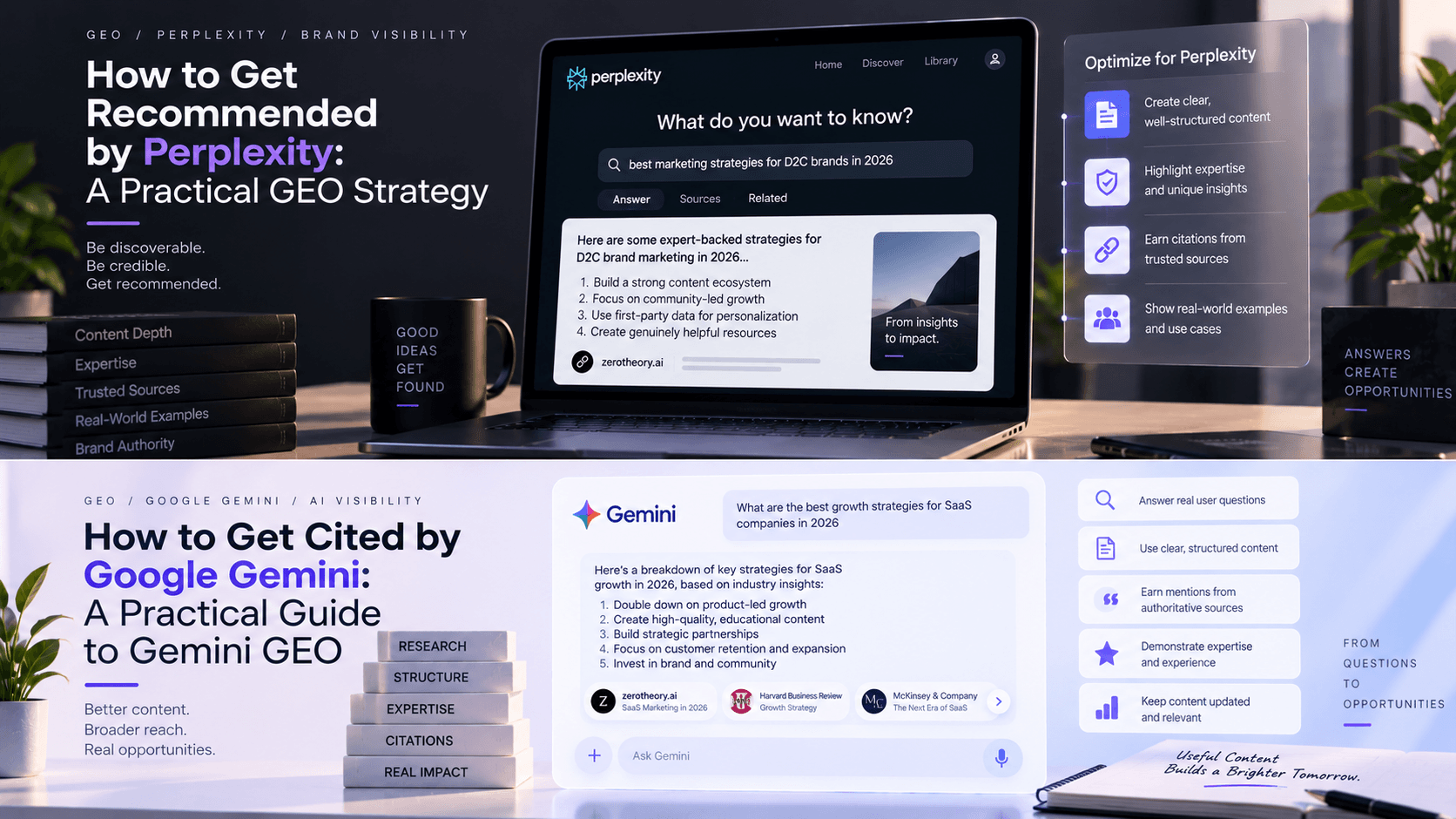
Perplexity is changing how users discover brands, products, and services by combining AI-generated answers with cited web sources. For businesses, being recommended in these responses can create a valuable new source of visibility and qualified traffic. This guide explains how Perplexity evaluates information and the practical GEO strategies brands can use to improve their chances of being discovered, referenced, and recommended in AI-powered search.
Perplexity is changing how people research products, companies, and hard questions. Instead of opening ten results, users ask and get a synthesised, source-cited answer. That's a real opportunity, but it hinges on a distinction most brands miss: getting cited is not the same as getting recommended.
If someone asks "what is GEO?", you want your article cited. If they ask "what are the best GEO agencies for SaaS?", you want your company recommended. Different objectives, different work.
What makes Perplexity different
Perplexity is built around search-driven, source-backed answers, so visibility depends on whether your content can be discovered, understood, and judged useful during retrieval. Crucially, it can surface from different sources than other AI engines. Zero Theory's own analysis is clear that ChatGPT and Perplexity can recommend different brands for the same query because their retrieval, sources, and evaluation differ, a point covered in the GEO pillar. So don't assume ChatGPT success transfers automatically.
Citation vs recommendation
"What is generative engine optimization?" may get your article cited. "Best GEO agencies in India" requires more than topical relevance, the system needs to understand what your company does, who it serves, where it operates, what it offers, why it's relevant, and whether credible information supports the claims. That's why entity SEO becomes central to being recommended.
The Perplexity playbook
Define exactly what you want to be recommended for. Not "we want Perplexity visibility," but "we want to be recommended for these 30 commercial prompts," best SEO agencies for SaaS, best GEO agencies in India, best AI marketing agencies for fintech, and so on.
Build commercial prompt clusters across category, industry, geography, problem, and comparison prompts so you get a realistic picture of recommendation visibility.
Make your website explicit. "We help businesses grow" tells an AI system almost nothing; state what the company is, its services, its industries, its geographic focus, its differentiation, and its expertise.
Keep brand information consistent across your site, LinkedIn, business profiles, directories, partner pages, reviews, and media, the wording can vary, but the core facts must align.
Build pages around commercial questions, so a service page answers what GEO is, who needs it, what an engagement includes, what problems it solves, how success is measured, what makes your approach different, and what evidence backs it.
Publish evidence, case studies, original research, expert commentary, recognisable frameworks, and verifiable client outcomes, and avoid inflated claims.
Earn third-party mentions where relevance beats volume: one highly relevant industry publication can outweigh dozens of unrelated directories.
Create comparison content (agency vs in-house GEO, SEO vs GEO, GEO vs AEO, AI search vs traditional) to show you understand the category, not just sell into it.
Build a recommendation-worthy brand by answering honestly: if Perplexity had to recommend five companies in your category, why yours? Proprietary research, vertical specialisation, strong proof, authoritative content, recognised expertise, a distinctive method. If you can't answer, your GEO problem is really a positioning problem.
Monitor Perplexity directly with a monthly prompt audit recording whether the brand was mentioned, recommended, and cited, which page was cited, which competitors appeared, and what criteria showed up, so the data tells you what to fix. This commercial-intent visibility is a revenue channel, so track recommendation rate, qualified referral traffic, branded searches, leads, pipeline influence, and conversion rate, the same revenue lens behind connecting your channels into one system.
Why content alone isn't enough
You can have 100 excellent articles and still be invisible if your company description is vague, your services unclear, your industry expertise hidden, and your third-party footprint weak. GEO operates at several levels at once, content, entity, authority, evidence, and retrieval, and all five matter. So don't fake reviews, don't spin up hundreds of thin pages, don't make unsupported "best" claims, don't copy competitor positioning, and don't rely solely on your own website. Optimise to become recommendable, not to game one platform.